
Best LLM for AI Agent Workflows: 2026 Cost/Latency Comparison
Four current candidates for agent workflows, with standard API costs and a method for testing accepted-task cost and latency.
TL;DR: Trial GPT-6.1 Sol for general tool use, Claude Opus 5.5 for longer work, Gemini 3.8 Flash for grounded tasks and GPT-6 Luna for narrow routing.
Checked 9 November 2026. An agent can spend most of its time waiting for a search or database response. It can also pay to read the same tool history several times. Measure cost and elapsed time per accepted task before choosing a model. For software repair specifically, see the coding benchmark comparison.
How was this list picked?
Each candidate has public API pricing and documented tool support. The shortlist covers four roles, from bounded routing to workflows that need to recover after several tool calls. Use the shortlist to decide what to test first. The rankings on general agent benchmarks can help identify candidates, but they cannot tell you how often a model selects the right tool in your own application.
Use the same tool definitions and permissions across candidates when you want to compare models. If each candidate uses a different vendor search service or runtime, record those differences and compare the resulting systems as deployed. Keep the model comparison separate from the deployed-system comparison.
How do these four LLMs compare on price and context?
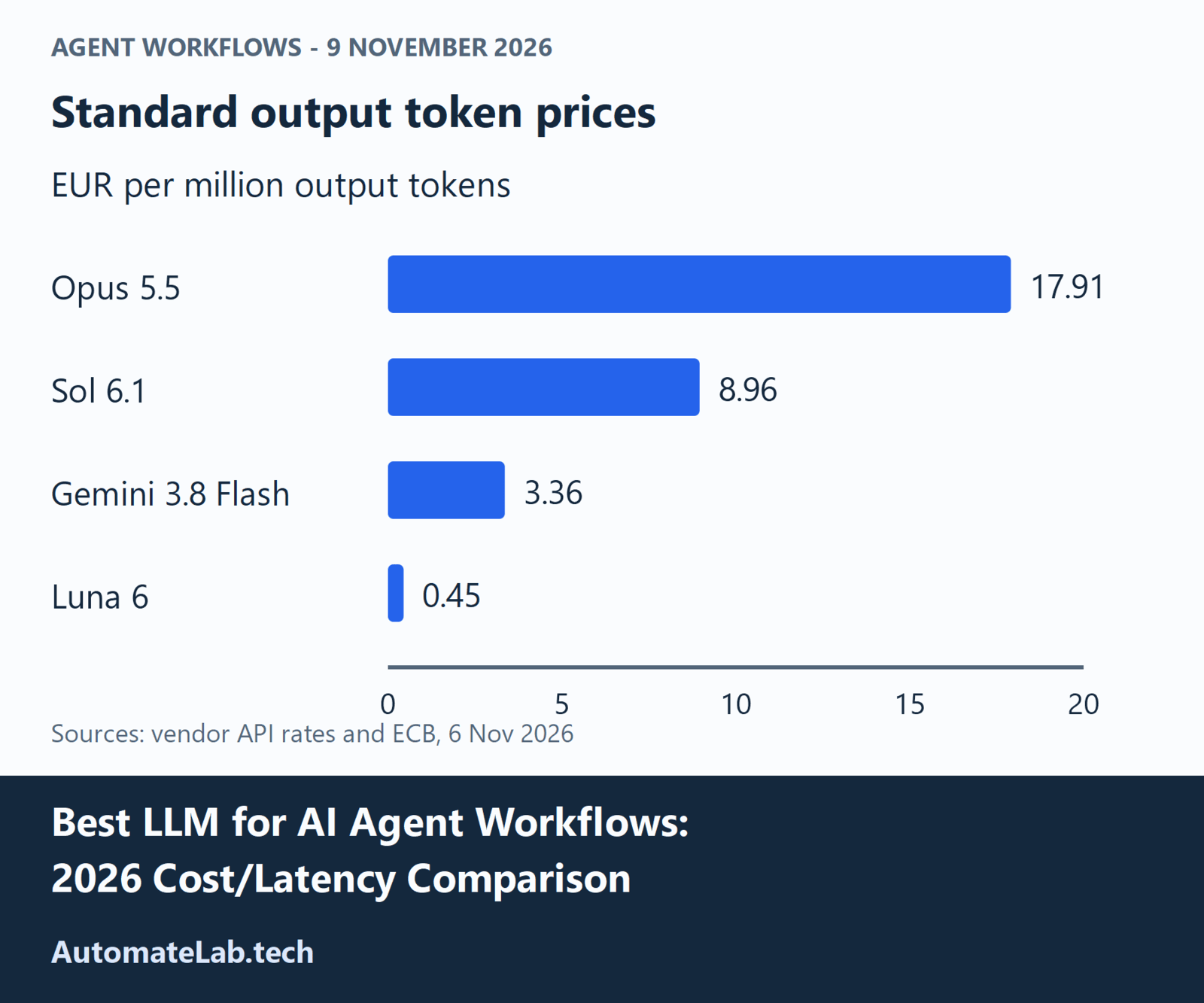
Prices checked November 2026. The table shows approximate euros per million uncached input and output tokens on standard paid API plans. It uses the 6 November ECB reference rate of 1.1165 US dollars per euro. Use each vendor's own billable token counts and check the rate for long prompts or special service tiers. Search, caching, storage and third-party tools may add separate charges. ECB exchange rate.
| Model | Input | Output | Published context | Best trial use |
|---|---|---|---|---|
| Claude Opus 5.5 | €3.58 | €17.91 | 1M | Long-running, difficult tasks |
| GPT-6.1 Sol | €1.79 | €8.96 | 1.05M | General orchestration baseline |
| Gemini 3.8 Flash | €0.67 | €3.36 | 1,048,576 input | Google Search grounding and mixed inputs |
| GPT-6 Luna | €0.09 | €0.45 | 1.05M | Focused routing and short tool chains |
When should you trial Claude Opus 5.5?
Trial Opus 5.5 when a workflow has to reconcile several tool results before making a decision. Anthropic recommends it for most workloads and lists adaptive thinking. Record the selected effort in your evaluation because thinking can change output usage and elapsed time. Check whether the extra spend buys fewer restarts or corrections in your workflow. Anthropic model catalog.
When should you trial GPT-6.1 Sol?
Use Sol as a baseline for multi-step orchestration if your stack already supports OpenAI function tools. Include tasks with missing inputs, ambiguous user intent and tool failures. Valid JSON can still carry the wrong customer ID or trigger the wrong action. Validate argument values before execution and score whether the workflow reached the intended state. OpenAI model catalog.
When should you trial Gemini 3.8 Flash?
Trial Gemini 3.8 Flash when search grounding or mixed inputs matter to the task. Its documented standard paid introductory rates run through 31 December 2026. The listed January 2027 rates are approximately €1.34 input and €6.72 output at the same exchange rate. Track search requests separately and budget for thinking tokens within the applicable limits. Google API pricing and Gemini model guide.
When should you trial GPT-6 Luna?
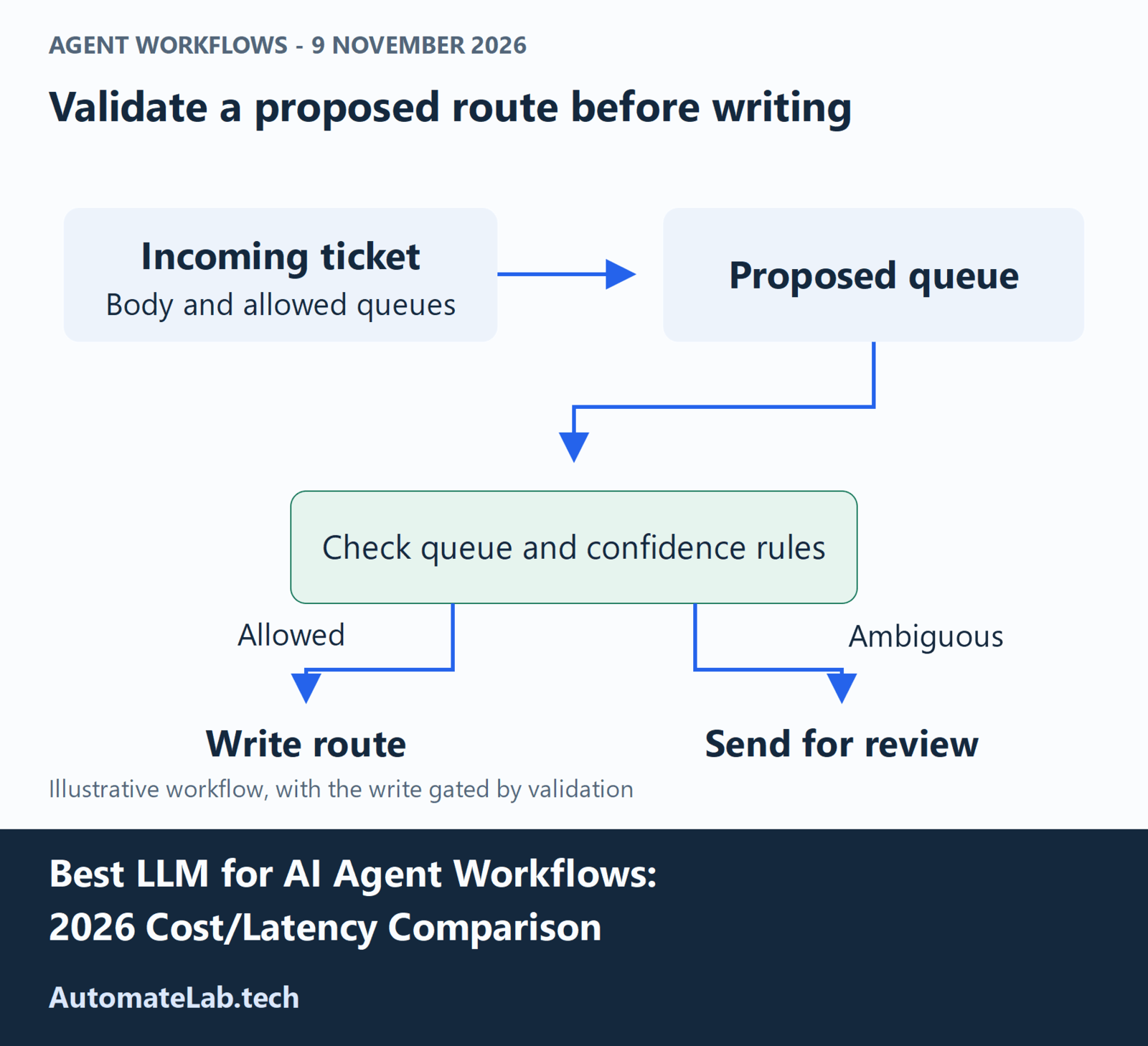
Start with Luna for a narrow action such as routing a ticket to one of a few queues. Allow the model to ask for missing information or return a decision for review. Test the cases that matter most, such as tickets that match two queues or contain customer instructions that conflict with the workflow's rules. OpenAI model catalog.
Which models almost made the list?
Claude Sonnet 5.5 is a sensible lower-cost trial alongside Opus 5.5. Anthropic recommends Fable 5.1 for more demanding reasoning if Opus falls short. DeepSeek's first-call docs now point to deepseek-flash, served by DeepSeek-V4.1-Flash-1017, so any production trial should identify the actual endpoint and served model. Anthropic models and DeepSeek API documentation.
How do you decide which LLM fits your agent workflow?
For an illustrative workload with 10,000 uncached input and 2,000 billable output tokens per attempt, 1,000 attempts would cost about €71.65 on Opus, €35.83 on Sol, €13.43 on Gemini and €1.79 on Luna in model tokens. The calculation uses unrounded conversions and identical usage. Real workflows can use different token counts and incur tool charges.
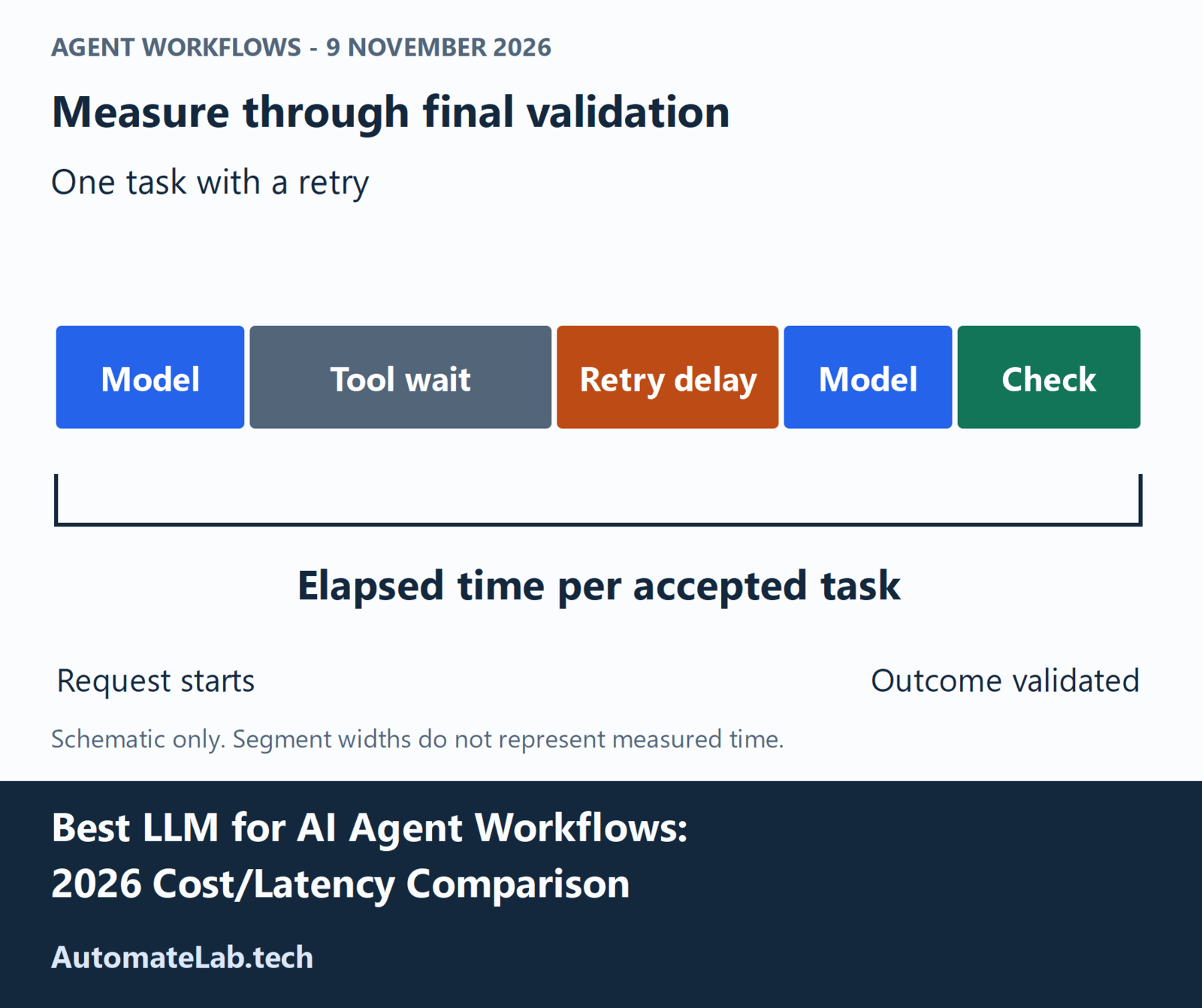
Measure elapsed time from the initial request to a validated result. Report median and p95 alongside the accepted-task rate, timeout count and total cost divided by accepted tasks. Record latency across failed attempts too. A fast first response can still lead to a slow completion when several sequential tool calls, backoffs or retries follow. The agentic workflow cost breakdown covers other operating costs.
- Replay a fixed set of normal, ambiguous and failing cases.
- Set the same task deadline, permissions and retry policy.
- Score the final workflow state and count all billable work.
- Choose among candidates that meet your acceptance and latency requirements.
FAQ
What's the cheapest LLM for high-volume tool-calling agents?
GPT-6 Luna has the lowest standard token rates in this shortlist. Check whether its accepted-task rate and retries keep the complete workflow inexpensive.
Does model cost scale with tokens per task or the per-token rate?
Both matter. Sum the model, tool and retry charges across all attempts, then divide by the number of accepted tasks.
Is DeepSeek V3 still a good default for production agents?
Start any new DeepSeek trial with the current documented model and confirm the endpoint you will run. Evaluate it on representative workflow outcomes before routing production traffic.
How does Claude's pricing compare across tiers?
Anthropic's current standard rates are lower for Sonnet 5.5 than Opus 5.5, while Fable 5.1 costs more. Compare total cost on the same set of tasks.
When does a cheaper model start winning on total cost?
It wins once its cost per accepted task is lower and it still meets your quality and latency targets. Include retries and any fallback model in that calculation.