
Best AI App Builders for Production Web Apps in 2027
Compare Lovable, Bolt, and Replit for production web apps, with database ownership, GitHub handoff, runtime costs, and practical tests before launch.

TL;DR: Choose Lovable for a managed web-app backend, Bolt for browser-based building with GitHub, or Replit for an integrated development and operating environment.
A founder can reach a working preview before deciding how customer data will survive an update. For a production web app, evaluate the database and release process alongside the generated interface. This 2027 shortlist uses vendor documentation, with no claimed hands-on speed ranking.
Which AI app builder should a nontechnical founder choose?
Lovable, Bolt, and Replit all deserve a pilot. Choose the one whose operating model you can maintain after launch. Capabilities and operating boundaries below were checked on October 26, 2026; paid building capacity does not guarantee an unlimited production hosting allowance.
| Builder | Best fit | Plan or operating boundary | Production decision |
|---|---|---|---|
| Lovable | Web app with a managed backend | Managed backend; runtime use draws on credits | Check runtime credit use and database portability separately from code sync |
| Bolt | Browser workflow with managed hosting and database options | JavaScript backend; Bolt Cloud or Supabase database | Confirm custom-domain entitlement; test data recovery separately from project history |
| Replit | Building and operating an app in one environment | Separate development and production databases | Verify the database restore window for the selected offer |
Treat the published allowance as a starting point for a project quote. A larger codebase can change generation costs, and real users consume runtime resources. Ask each pilot to produce the same small app with login, private records, and one server-side integration.
Where do Lovable, Bolt, and Replit fit production apps?
When should a founder choose Lovable?
Lovable fits a founder who wants the app and backend managed together. Its built-in Cloud backend includes a database, authentication, storage, and functions. Describe the user flow, then inspect whether the generated data model matches who should see each record.
Its GitHub integration exports and synchronizes project code, supporting developer collaboration and deployment elsewhere. Keep a repository in an account the business controls. A source-code copy is one part of a handover; live data and external service configuration need their own transfer plan.
Skip it if your required backend or deployment rules cannot fit its documented architecture. Lovable's current pricing FAQ says paid credits can cover building, Cloud, and app AI features. Watch runtime consumption alongside development spending, and confirm the actual grant and overage rules on the selected offer. Moving code to GitHub does not move the live database or its credentials.
When should a founder choose Bolt?
Bolt fits someone who wants a browser-based workspace with publishing and database options. Its documentation describes built-in Bolt Cloud databases and an option to connect Supabase. Choose the database owner before customer records arrive. Confirm the hosting allowance and custom-domain entitlement on your selected plan; generation tokens measure a different activity from requests to the deployed app.
Its GitHub workflow gives the business a code repository for future developer work. Keep that repository in an account the business controls, and document which external services must be recreated if the app moves to another host.
Use Chrome or another Chromium desktop browser for Bolt's editing workflow, as its supported technologies documentation recommends. Mobile browsers are not fully supported. Bolt supports JavaScript backends such as Node.js; a requirement for a Python or PHP backend changes the shortlist. This concerns the builder environment, not a claim that customers must use Chrome.
When should a founder choose Replit?
Replit fits a founder who wants development tools and app operations together. The Core membership includes paid Agent modes, connectors, secrets management, and multiple publishing options. Its Git pane supports a repository-based developer handover.
Check Replit's selected plan and usage charges before buying a specific recovery allowance. Ask for the documented database restore window and run the restore against disposable records. A longer retention promise is useful only if the operator can select the right point and verify the recovered app.
Skip it if nobody will inspect publishing and database changes. Replit documents separate development and production databases. Review schema changes before publishing, especially when existing records lack a newly required field. A successful preview does not demonstrate a safe migration of customer data.
What test separates a demo from a production app?
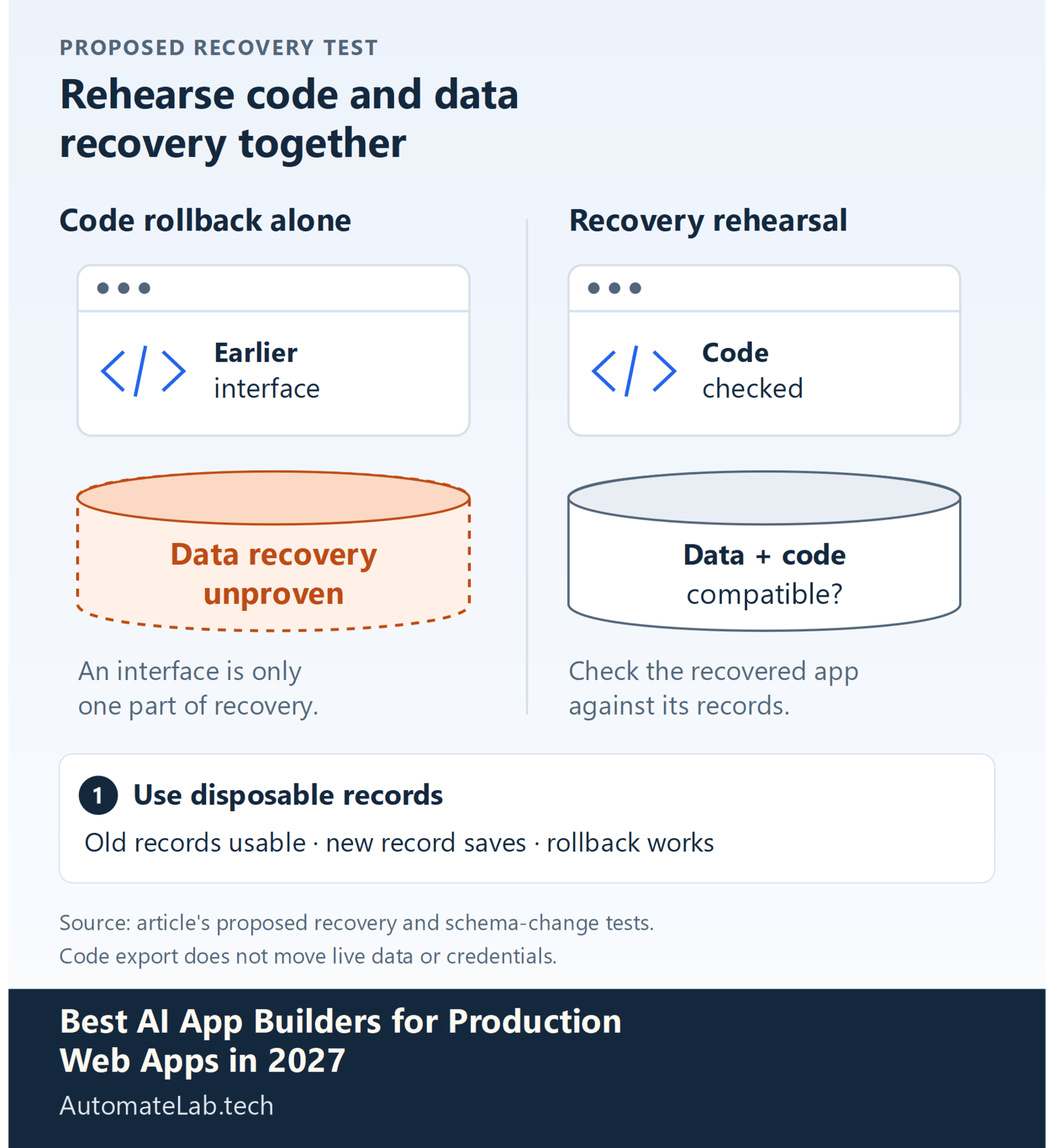
Restoring code and restoring data require separate checks. Returning to an earlier interface does not prove that deleted customer records will return, or that an older application can read a changed database schema. Rehearse both forms of recovery with disposable records.
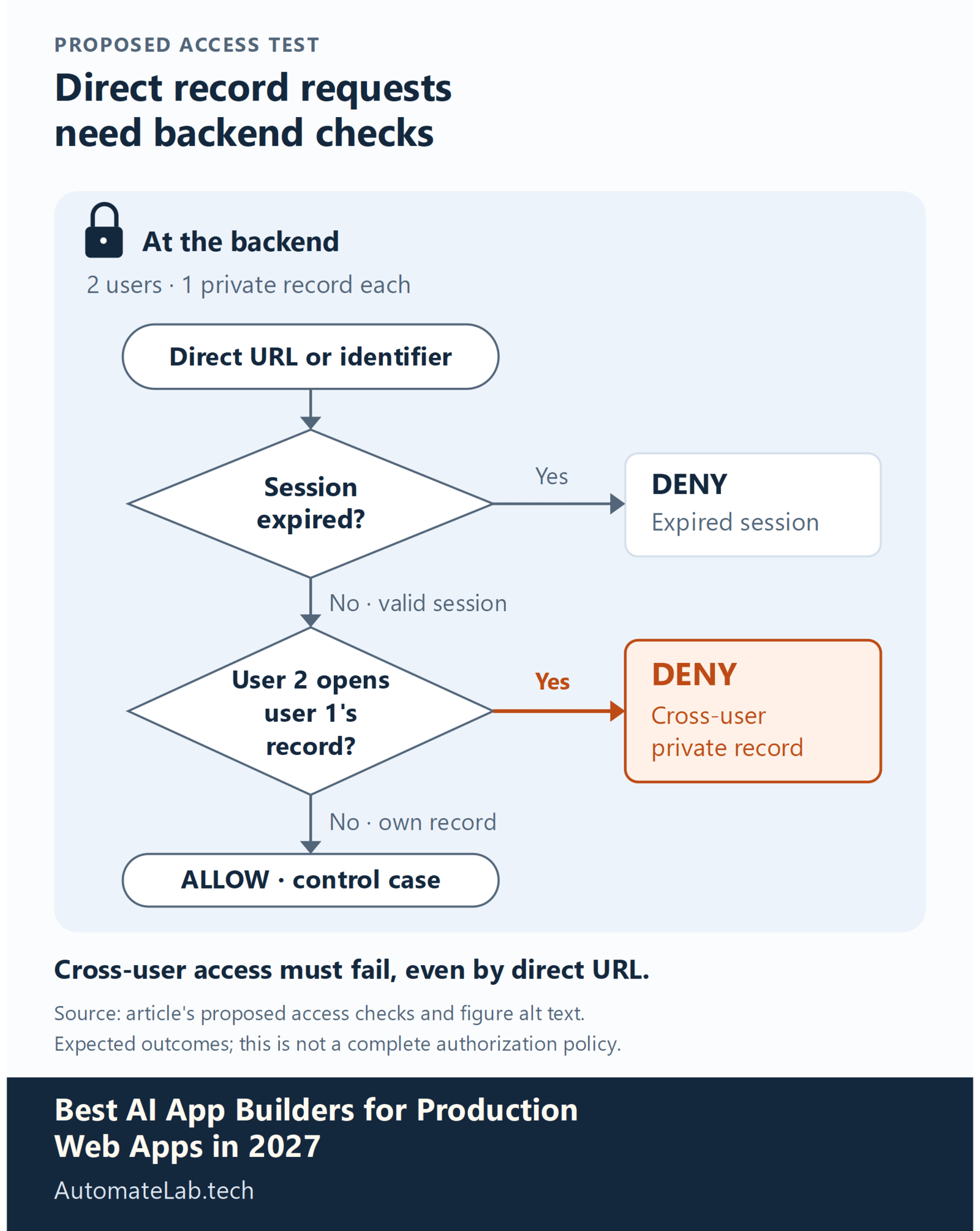
Create two test users and one private record for each. Sign in as the second user and try to open the first user's record directly by URL or identifier. The app must deny access at the backend, even if someone bypasses the normal navigation. Also test an expired login session.
Next, publish a change that adds a required field to existing records in a test environment. Confirm old records remain usable, a new record saves correctly, and rollback leaves a working app. Trigger the server-side integration twice with the same event ID and check for duplicate actions.
Ask a developer to review the access rules and recovery evidence before storing customer data. Give that reviewer the repository and the deployment configuration. A test record, an expected result, and the observed failure are more useful than a prompt saying the app is secure.
Related guides cover How to Deploy an AI Agent to Production with Express and Docker and Best LLM for Coding in 2026: What the Benchmarks Actually Say.
How do you verify the shortlist before launch?
- Export Lovable's code and document the separate steps needed to recover its live data.
- Test Bolt's publishing and maintenance workflow in the browser the operator will use.
- Rehearse a Replit database change and recovery against existing test records.
FAQ
Can a nontechnical founder launch with these tools?
Yes, but launch readiness depends on the app's access rules, integrations, and recovery process. Arrange technical help for those checks if you cannot verify them yourself.
Does GitHub export remove platform dependence?
It gives you a copy of the code. Moving a live app also requires its data, secrets, service connections, and a working deployment configuration.
Does the subscription include all hosting costs?
Do not assume that. Check the current runtime allowance, overage rules, database charges, and any external API costs for your expected traffic.